
Does Clinical Experience Matter in High School?
High school clinical experience rarely affects medical school admissions. Here's what it does count for, what qualifies at 14–18, and the age rules for volunteering, CNA, EMT, and scribe roles.
Does Clinical Experience Matter in High School?
If you're a high school student dreaming of becoming a doctor, you might feel pressure to start racking up clinical hours right away. High school clinical experience is rarely a deciding factor for medical school admissions. That application evaluates almost entirely what you do after you graduate high school. What it does matter for is your own sense of whether medicine is actually a fit, your college applications, and, if you're going that route, BS/MD program admissions.
This guide covers how medical admissions committees actually view your high school years, what counts as meaningful clinical exposure like hospital volunteering at this stage, which roles are realistically available for high school students, and how to spend your time wisely instead of chasing hours for their own sake. While clinical hours are hard to secure before age 18, joining a structured pre-med organization like HSAFP allows you to start developing core healthcare capabilities—such as leadership, ethical judgment, and scientific inquiry—right from your high school campus.
Does clinical experience actually matter for high school students?
Not directly. Clinical experience is a non-negotiable requirement by the time you apply to medical school, but admissions committees almost exclusively evaluate experience beginning during your undergraduate degree. Shadowing a doctor or volunteering in a hospital while you're still in high school helps you test your interest in healthcare before you commit to a demanding pre-med track in college.
Through work or volunteering, you gain a better idea of the daily realities of patient care and the lifestyle of a practicing physician long before you've built years of coursework around that assumption. The slow pace of a routine primary care visit versus the adrenaline of an ER shift, the amount of charting and administrative work that surrounds actual patient time, the emotional weight of sitting with a family through a hard diagnosis… These are all balancing acts, and it’s worth getting a sense of how you handle the push and pull. That balance is a skill a biology textbook can't teach you.
Why do medical schools look past high school activities?
When you eventually apply to medical school through the AAMC's AMCAS system (for MD programs) or AACOMAS (for DO programs), the Work and Activities section is built around your life during your undergraduate degree. There's no rule that says you can’t list something from high school. But admissions officers and advisors almost always tell students to leave it off. However, if it was an activity that kept going from high school into college or something genuinely unusual, like a passion project or a job that stands out, you could include it. Maybe you started a project junior year of high school and stuck with it through sophomore year of college. That would belong on your application. That said, reviewers will just weigh the college-era portion far more heavily than the high school portion.
Admissions committees care about commitment that lasts, not activities that start early. A committee will generally value an applicant who discovered medicine as a college freshman and built 300 reflective hours of patient care over three years more than one who logged 50 hours in a hospital as a high school sophomore and considered the box checked.
Even though high school hours rarely go on a medical school application, the habits you form do. HSAFP’s curriculum aligns directly with the AAMC Pre-Med Competencies—the exact professional and interpersonal traits medical schools look for in college applicants. Building competencies like service orientation, teamwork, and critical thinking in an HSAFP chapter gives you a head start long before you step onto a college campus.
| Feature | High School Activities | College Activities |
|---|---|---|
| AMCAS/AACOMAS inclusion | Generally left off, unless continuous into college | Fully included and reviewed |
| Evaluative weight | Minimal for traditional MD/DO admissions | High |
| Primary value | Personal exploration; BS/MD applications | Demonstrating clinical competency and commitment |
| Typical access level | Informal observation (shadowing, basic volunteering) | Direct patient interaction (CNA, EMT, scribe) |
What actually counts as clinical exposure at this age?
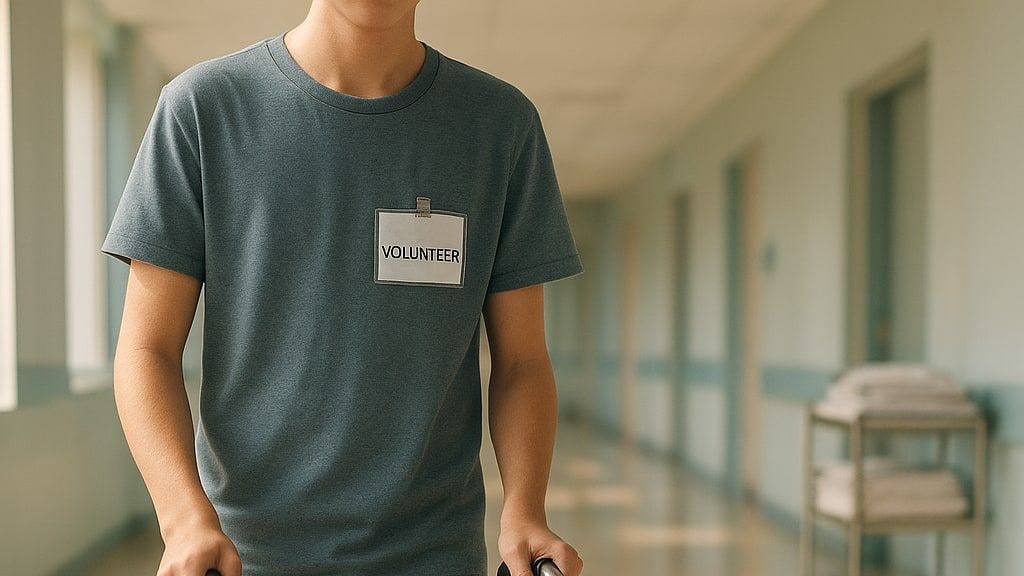
- Hospital and clinic volunteering: Most health systems run formal junior volunteer programs, typically starting around age 15–16. Tasks usually include restocking supplies, transporting patients in wheelchairs, or greeting visitors. While there are rarely hands-on medical tasks due to liability restrictions, it is still valuable exposure to how a hospital actually runs.
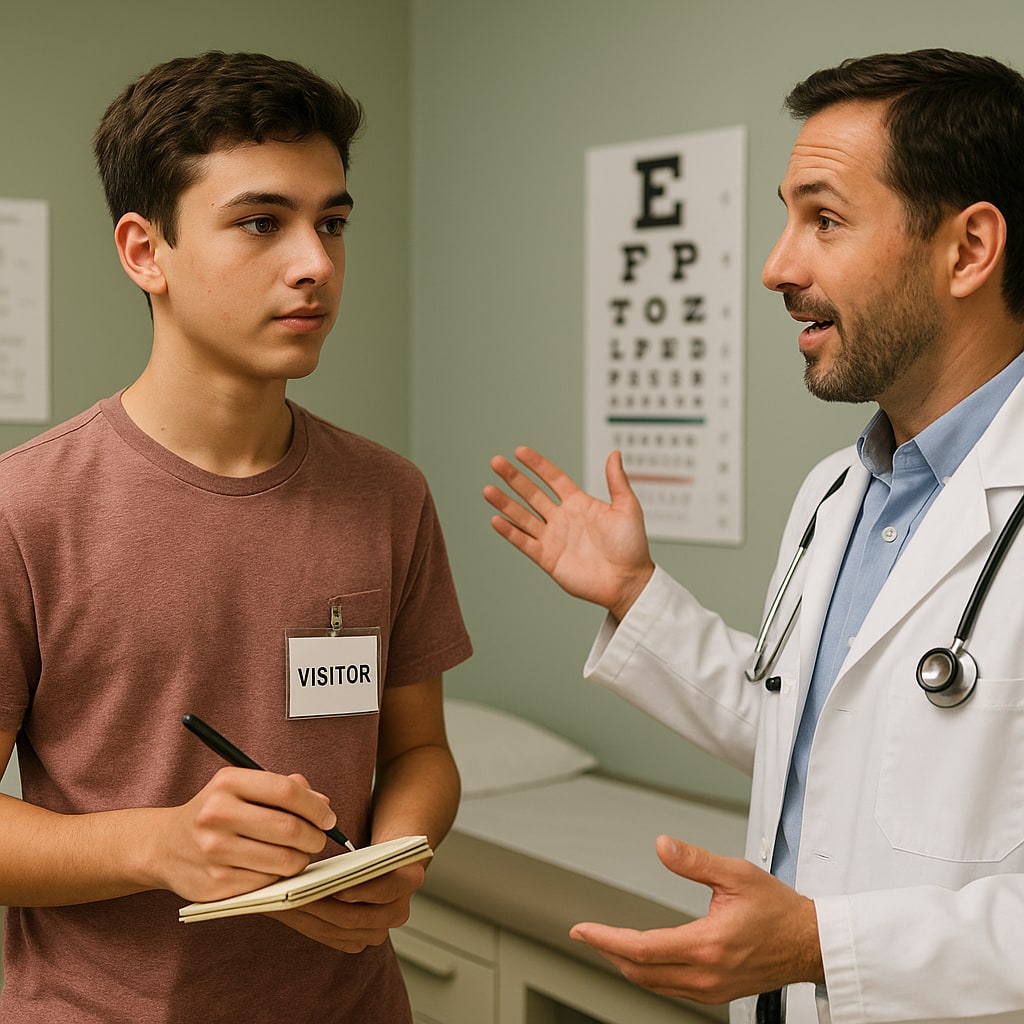
- Physician shadowing: Following a doctor through their daily routine, even a few hours a month, is one of the most efficient ways to see what a medical career actually involves. Between consultations, paperwork, and the very different day-to-day of, say, pediatrics versus orthopedic surgery, shadowing can provide a high school student with a clearer sense of the kind of knowledge and skills required for various tracks of medicine.
- Pre-Med Student Organizations (HSAFP): If age limits or local hospital regulations restrict your access to clinical sites, participating in an HSAFP chapter offers a structured way to explore the medical field. Through chapter activities, hands-on workshops, and curriculum built around medical competencies, high schoolers gain exposure to the healthcare system and develop practical skills that strengthen both college applications and future medical training.
- Formal summer medical programs: Many universities run summer enrichment programs featuring faculty lectures and simulated clinical skills sessions (suturing, taking blood pressure, and similar). These rarely count as official clinical hours later, but they can meaningfully sharpen your sense of interest and give a high school student a greater sense of the direction they want to take their pre-med education. Be cautious of costly pay-to-play versions, though! An expensive program doesn't carry more weight with admissions than a free or low-cost local one.
- Age-gated clinical roles: A smaller number of students pursue an actual credential or paid role before finishing high school:
| Role | Typical Minimum Age | Notes |
|---|---|---|
| CNA (Certified Nursing Assistant) | 16–18 | Training can often start at 16 where state law allows; certification and hiring are frequently restricted to 18 even where training isn't |
| EMT | 16–17 for training, 18 for certification/employment | NREMT dropped its national minimum age in 2019, but most states still set their own floor, commonly 18 |
| Medical scribe | 16–18 | Varies by employer and state; some large scribe companies set an 18 minimum, others allow 16 where labor law permits |
| Hospice volunteer | 14–18 | Varies widely by organization; some hospice programs specifically recruit high schoolers for patient companionship roles |
Most students don't clear these thresholds until midway through high school. The mechanics of finding shadowing and volunteering opportunities without a strict age floor are covered in more detail in How to Acquire Volunteering and Shadowing Experience as a High School Student.
How should you actually spend your high school years if you want to be a doctor?
Clinical experience helps you figure out whether medicine is right for you and what kind of doctor you want to be. But it should complement the foundation you’re building in high school.
- Focus on academics first: Master your core science subjects, push yourself in advanced math and writing, and build real study habits now. College science is a big jump, and handling it well means learning how to study before you get there.
- Keep the interests you already have: If you love music, debate, or a sport, stick with it. Colleges want well-rounded, interesting applicants, not ones that look like a long medical résumé. Those continued interests make you a more attractive candidate for admission and a more well-rounded future physician, too.
- Build a long-term community service habit: Find a cause you actually care about and stay with it for years rather than switching between one-off events. Staying with something shows that you follow through and that your values are real.
- Build core competencies through extracurriculars: Look for extracurricular involvement that goes beyond passive observation. Becoming an active participant or leader in HSAFP lets you work through competency-based challenges, engage with healthcare leaders, and practice collaborative problem-solving—skills aligned with the AAMC Pre-Med Competencies that a biology textbook alone cannot teach.
- Explore healthcare through low-pressure exposure: Treat medicine as an open question, not a decision you’ve already made. Shadow a physician occasionally. Volunteer a few hours a month. Keep a record of what you see and how it makes you feel. That reflection can eventually inform your future personal statement and help you decide on a major later on during your undergraduate degree.
- Get involved in research: Research is very well regarded by medical schools and is an expectation for top-tier medical schools. Thinking scientifically and understanding how medical advances are made are very important competencies of physicians. By getting involved in research in high school, it will make it much easier for you to find research opportunities in college, which can be competitive. There are summer programs available across the country, but you can also volunteer in a lab at your local university. Given the high learning curve, this is usually done during the summer with a 9-to-5 schedule for 6 to 10 weeks.
When does early direct clinical experience matter?
There are two real exceptions in which clinical experience as a high school student makes a direct impact.
- BS/MD and direct-admission medical programs: If you're applying to a combined BS/MD program, high school clinical experience shifts from optional to close to essential. These programs commit a medical school seat to an 18-year-old, so their admissions committees want clear evidence you understand what you're signing up for. Documented shadowing, strong letters of recommendation, real clinical volunteering, or a clear reason for choosing medicine is the kind of evidence they’re looking for. Long-term leadership in HSAFP—especially when tied to demonstrated growth in the AAMC Pre-Med Competencies—provides concrete evidence of your dedication, maturity, and pre-med readiness.
- Personal conviction that carries you through the hard years: The full path to medical school is long — 4 years of college, 4 of medical school including intense clinical rotations, and 3 to 7 of residency. Having spent real time in a clinic or emergency room before any of that starts can be what turns a vague interest into a reason to keep going when the semesters get hard.
Frequently Asked Questions
Do medical school application portals ask about high school activities?
Not directly. AMCAS and AACOMAS are built around post-secondary activities. High school activities are generally left off unless they continued without interruption into college, or were genuinely exceptional.
How does participating in an HSAFP chapter help my college and pre-med prospects?
College admissions committees favor applicants who demonstrate initiative and structured skill development. HSAFP helps high school students build and document core competencies aligned with the AAMC framework, giving you concrete experiences to draw upon in college application essays, interviews, and future undergraduate pre-med tracks.
Can I volunteer at a hospital at 16?
Yes, in most cases. 16 is a common minimum age for hospital teen volunteer programs, and many hospitals run dedicated summer programs for that age group specifically. Some set the floor as low as 14 or 15 for non-clinical roles.
How do you become a CNA in high school?
In states that allow it, you can typically start CNA training at 16, often through a high school career and technical education program or a local vocational course. Certification and paid employment are more commonly restricted to 18, so confirm your state's specific rules before enrolling.
How do you become an EMT in high school?
Some states allow EMT training to begin at 16 or 17, but most require you to be 18 before certification or employment. A handful of states have lowered the training age specifically to let high schools offer EMT coursework before graduation.
Can you be a medical scribe in high school, and what's the age requirement?
Sometimes. Some employers set a minimum age of 16 where state law allows it, but many scribe companies, including some of the larger national ones, require applicants to be 18. It's worth checking specific employers in your area rather than assuming either way.
How many clinical hours should a high school student aim for?
There's no official minimum, and quality of reflection matters more than quantity at this stage. Many advisors suggest somewhere in the range of 20 to 50 hours of combined shadowing and basic volunteering is enough to get a genuine sense of the field. The exception is BS/MD applicants, who generally benefit from more consistent involvement over one to two years (100+ hours).
Is shadowing a doctor in high school worth putting on a college application?
Yes. It's appropriate for undergraduate applications and shows proactive career exploration, especially for pre-health tracks or biology and health science majors, even though it typically won't carry into your eventual medical school application. In general, however, activities where you play an active role, such as volunteering, working as a CNA, or taking a leadership role in HSAFP, carry more weight on your application. Shadowing is a great way to see what a physician does, but active participation highlights your personal qualities and competencies.